
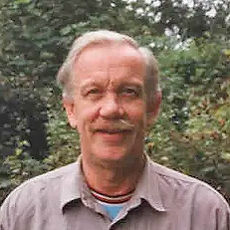
Kent FHS invited members of East Surrey FHS to join us for this talk via Zoom and on Tuesday 9th June, East Surrey FHS invited Kent members to join with them for the same talk. As per our agreement with the speaker neither talk was recorded.
Colin showed slides of paintings of large families in the 16th and 17th centuries and a photograph of the Terry family of Greenwich in 1925. He said a look through baptism registers and graveyard inscriptions show that many very large families, with maybe a child born every year, were scattered about our country and it was no different in other countries. Which meant that many women spent their childbearing years almost permanently pregnant. But of course many of the children born to them would never reach adolescence as in the past infant mortality was so high.
Birth registers also reveal many cases of children born out of wedlock. The vicar noting bastard against the entry. Bastardy wasn’t that uncommon despite being such a serious matter that many unmarried mothers were turned out of their family homes in disgrace.
Further study of birth registers also reveal families with gaps of maybe 2/3 years between each child, which is often thought to be due to miscarriages and stillborn births. But, Colin asked, have you considered that these gaps may also have been due to our ancestors using some form of family planning?
Colin said we will most likely have heard of Mary Stopes (1880-1958) and that she was a pioneer of birth control in this country. He has built up a large collection of 1,500 books on this genre in his personal library of which Mary Stopes books are 1% on this subject. Colin said his library is considered the largest private library on the subject of birth control. He continues his talk naming several other people from the 19th and 20th century, who were advocating family planning or birth control such as Margaret Sanger in the USA, Charles Bradlaugh MP for Northampton and Dr Aletta Jacobs the first Dutch woman to become a doctor became the first person to open a family planning clinic in 1882.
In fact contraception was not a new idea even in the 19th century. Colin then went back through the ages citing various works on human reproduction and contraception. The earliest work he spoke about was the Kahun papyrus written in 1850 BC, about 4,000 years ago, which advocated the use of spermicides made from crocodile dung. Colin recommended collecting fresh dung early in the day from a crocodile or an elephant if no crocodiles are available. He said as a retired Chemist he can confirm that the ingredients found in crocodile and elephant dung would work very well as a spermicide.
Eber’s papyrus written in 1550 BC recommended pessaries made from crushed Acacia leaves mixed with honey and olive oil to slow down the movement of the sperm. Crushed Acacia leaves produces Lactic Acid which is still one of the ingredients of spermicides today.
Another early work from the Middle East, The Quintessence of Experience by Rhazes (867-925 AD) covers aspects of medical treatments and contains advice on the use of pessaries and sneezing and jumping backwards and forwards to aid conception or to halt it. Crazy as it seems a doctor in the USA was still recommending sneezing and jumping as a method of contraception in 1866 as was Dr Taylor, as late as 1935, in the UK.
In ‘Canon of Medicine’ Avicenna (980-1037AD) suggested the Rhythm method of birth control and spermicides. Colin listed several other authors of works on population control written in the past.
In early times people did not consider conception having anything to do with copulation. Conception was thought to happen by magic and so people relied on folklore and magic to prevent it. One way was to capture a certain type of spider take out the contents of the stomach and put it in a bag which was then hung around the neck during intercourse. Another way was dried weasel testicles placed in a bag and strapped to your upper arm. Or failing finding the spiders and weasels Colin said you could always spit into the mouth of a giraffe!
Thomas Malthus published Principles of Population in 1798. His concern was something we appreciate today, that populations can double year on year but food production goes up at a slow pace. Hence, food production can never keep pace with the natural growth of the population. Colin considered how natural population control of Wars, Natural disasters, Infanticide and migration worked.
He talked about institutions such as the Corum Foundling Hospital founded in London in 1741, and said that similar organisations were set up in other heavily populated cities to care for orphaned or abandoned children. Babies slept in these hospitals at night but were farmed out to minders in the daytime who often fed them Gin to keep them quiet and under control.
Abortion was another method of early birth control. In 13th century seeds of the Pennyroyal were consumed as an abortifacient. Between 1307 and 1803 it was not illegal to abort a child. But in 1804 it became a crime with the punishment of transportation before the ‘quickening’ but after the quickening abortion was treated as murder with a sentence of death as the punishment.
In the Victoria era there were many advertisement in newspapers for pills that would cure all including preventing a pregnancy. But the cost of these pills was not prohibitive for the working class man.Breast feeding for the first years of the babies life ws known to be effective in preventing another pregancy but was considered distasteful to upper class ladies hence they often had large families with births almost every year.
Colin brought his talk to a close showing condoms made of linen, fish bladders and rubber. He also showed various early coils and even chastity belts. But said the only certain way to avoid a pregnancy was to say NO!
About the speaker: Colin Chapman is an international speaker and author of 15 books relating to British local, social and family history and heraldry and an acclaimed authority on WW1 German POWs held in Britain. He is a Life Vice-President of the Family History Federation and a Vice-President and Fellow of the Society of Genealogists having been a former member of its (then) Executive Committee.
Report by Tricia Baxter