
Every year Canterbury branch holds an outdoor evening. This year on a beautiful sunny evening we had a guided walk of Whitstable, led by Steve Keeler, Exhibitions Co-ordinator of Whitstable Museum and Gallery

We met at the museum and Steve started by taking the group across the road and in to Middle Wall where he pointed out where shoreline had been originally until the sea wall was built in the 16th century. We made our way from here via the back streets to the Harbour. Along the way Steve spoke about how this route had once been full of shipyards, pubs and shops and showed old photographs from which we could pick out buildings standing today which have changed their use over time and are now mainly private houses.
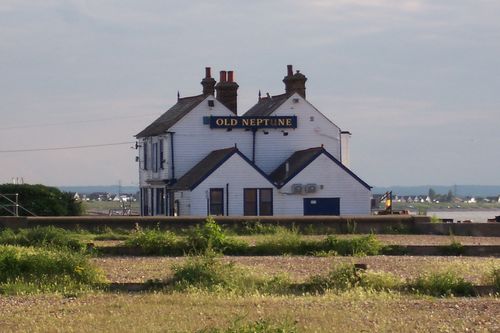
Steve showed photographs of The Old Neptune which stands on West beach and showed photographs to demonstrate how the high water mark had changed over time.
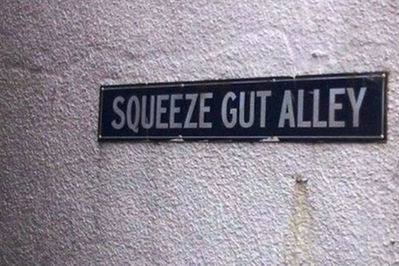
We passed Squeeze Gut Alley possibly the most famous of the narrow lanes between the houses and we could see for ourselves how it got its name.
At Island Wall we stopped to see The Favourite, an Oyster yawl one of the last to be built at Whitstable. Ship building declined in the town, as it did elsewhere, when iron replaced wood for building ships. Although, there were still a couple of shipwrights in Whitstable well into the 20th century.
Passing Reeves beach Steve talked about the Horsebridge which had been the first harbour for the town. He also touched on the Oyster beds which date from at least Roman times and are still in use today.
Arriving at Whitstable Harbour we were reminded that it was built to bring in goods by sea for the Crab and Winkle Line (Whitstable and Canterbury Railway) one of the first railways in the world. Steve explained that since the harbour was built in 1832 the harbour walls had needed to be repaired on several occasions and each time it was repaired the construction was built in front of the existing wall. Hence the harbour has 'shrunk' a good 8 meters from its original line.
We were led through the harbour to look across the road to Gorrell Tank which is now a car park. the tank had been built to collect sea water at high tide to flush the harbour through to remove silt; sand and other debris. But Steve said this was not always sufficient to keep the harbour free of silt and often a team had to go into the harbour at low tide and manually shovel the silt to a position where the flushing water could remove it.
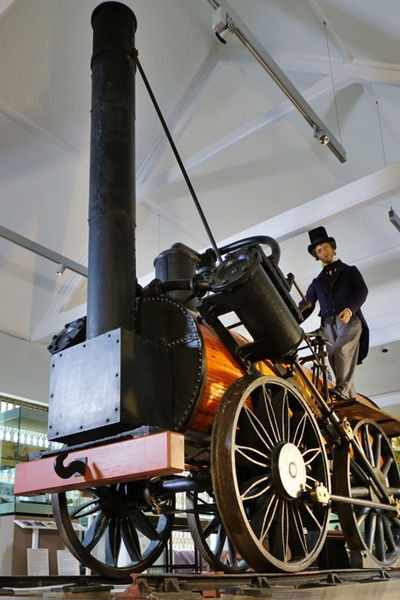
Steve led us back to the Museum where we were allowed free time to look around the exhibits. Central, or pride of place, is Invicta one of the
first railway engines in the world. A Stevenson engine, it was second only to his famous Rocket. Steve had previously explained that Invicta had only been strong enough to pull carriages on the Whitstable part of the line. To bring carriages up from Canterbury static engines were used in Clowes Woods. The area where one of the static engines was sited has since been converted to a picnic area on the Crab and Winkle Way, a walking and cycling route which follows most of the route of the original railway track. The C&WR was axed in 1952 but put back in use after violent storms in 1953 destroyed the railway track from London to Canterbury. The C&WR was then finally taken out of use once the coastal track had been rebuilt. The museum also houses memorabilia of the actor Peter Cushing, who retired to Whitstable, and is known for his roles in the Hammer horror films and as Grand Moff Tarkin in Star wars. Amongst many interesting displays in the museum there is an Oyster grotto traditionally made in the Victorian era by children for the annual Oyster Festival, and also the world's first diving helmet.
An extremely interesting and entertaining walk.
Report by Tricia Baxter, Branch Hon President.