
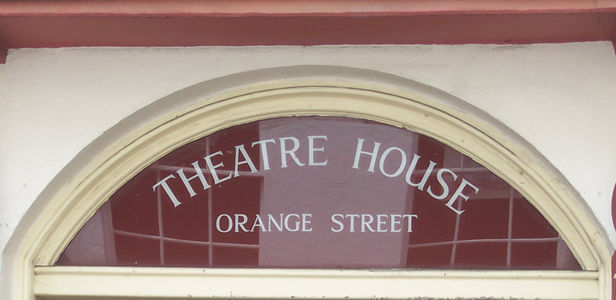
Orange Street Canterbury
Sarah Baker and her Kentish Theatres 1737-1816
Dr Jean Baker gave an illustrated talk based on her book about, Sarah Baker, an exceptional woman who was the most successful female Theatre Manager of her era. Jean said she became interested in Sarah when she found a reference to her in an 18th century newspaper about Folkestone’s New Theatre.
Jean’s subsequent research about Sarah’s life uncovered a rags to riches tale of a girl born in the 18th century to parents who were part of an itinerant troupe of strolling players and fairground entertainers. Given the era in which Sarah lived, when such entertainers were considered the lowest of the low coupled with the fact that she was illiterate, it is remarkable that Sarah ended her days owning and managing 4 theatres in Kent with an estate worth in excess of £20,000 (estimated worth today nearly £2 million).
Sarah was born about 1737, daughter of James Wakelin and Ann nee Clark his wife, who was an acrobatic dancer. Their marriage is registered in June 1737 in the parish registers of Finsbury, St Luke. It is likely that Ann was pregnant with Sarah when she married as Sarah’s birth, estimated from her death in February 1816 when she was said to be in her 80th year, suggests 1737. Sarah had a younger sister Moll [Mary] born about two years after her and both girls travelled with their parent’s performing from a young age. Sarah’s father, James Wakelin, abandoned his family in the 1740s. But by 1750 Sarah’s mother Ann had her own troupe which travelled about England to perform in places such as Bristol, Yarmouth, Kent, and Saddlers Wells London.
Sarah was a versatile performer, she danced, acted, sang, and walked the tightrope wire. On 6th January 1760, when she was 17, Sarah married Tom Baker a tumbler in her mother’s troupe. By 1769 Sarah and Tom were the parents of 3 children; a daughter and 2 sons, the youngest son was born and died in 1769. Unfortunately, like her mother, Sarah’s married wasn’t to last either.
In 1737 the Government had passed a Draconian Act which required companies to have a licence to perform but licences were only issued to the Covent Garden and Drury Lane Companies. Companies like Sarah’s that worked mainly in the provinces had to rely on the good will of local Magistrates turning a blind eye as legally they could have been in trouble themselves as they should have been preventing unlicensed theatrical performances. There were no proper theatres in the provinces at this time and so strolling players performed in Assembly Rooms and Inns but often in premises that were far from suitable such as Barns, Workshops and Warehouses converted temporarily as theatres.
In 1778 Sarah took over her mother’s troupe relaunching it as Mrs Bakers troupe. Performing must have been risky for Sarah’s Company as they could all have been arrested for performing without a licence.
But in 1788 the Licencing Act was passed allowing provincial magistrates to grant local licences for players to perform in their areas. This was a turning point for Sarah and she soon had a wooden building constructed in Tunbridge Wells in which her troupe could perform. By, 24th August 1789 she had opened her first purpose built Theatre in Orange Street Canterbury turning a former Assembly Room and Dancing School into a theatre at a cost of £3,000 [today £344,000]. James Simmons, local entrepreneur, proprietor of the Kentish Gazette, twice Mayor and MP of Canterbury was her backer.
There followed theatres at Rochester, Maidstone, and the wooden construction at Tunbridge Wells was replaced and moved to a purpose-built brick construction in The Pantiles. Sarah charged 3 shillings, 2 shillings and 1 shilling and half price if you entered in the interval to watch performances. She had a variety of different types of performances and even put on Shakespearian plays. The actors, especially those who were part of her family often had to play several parts in one evening and the show was not the same the following day, so a good memory was required as most performers were illiterate.
Sarah had her own house attached to her theatres so her family and other performers had a place to retire too after the performance. The House at Rochester, Jean said, was her favourite and it was there that she died in February 1816 a few months before her 80th birthday.
Unfortunately, her son in law who took over as Company manager tried to gentrify the performances and it did not go down well with the audience. He was soon in financial difficulties especially when Sarah’s son tried to intervene.
After the talk Jean answered questions and had copies of her book on sale for the charity ‘The Society for Theatre Research'’. Jean added that these were the last few copies of the book which was now out of print. Although copies might still be available from some specialist bookshops.
Report by Tricia Baxter