
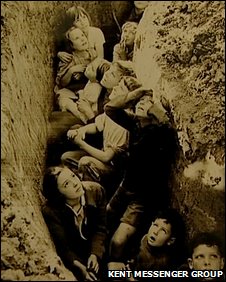
The group met to discuss family memories of World War 2. Some of us have actual memories from that time. Others have memories from our parents and grandparents that have been handed down to us.
Many memories were similar: air raids, sheltering under the table, getting bombed out of homes, playing on bomb sites, rationing, growing fruit and vegetables in the garden or on allotments and a ‘make do and mend’ mentality.
There was much talk of families being split up. This was not just due to fathers/ husbands going off to war, but also evacuation, working where needed and trying to move the family away from areas of the country that were deemed most dangerous. One group member, born at the start of the war, recalls knowing her father as a photo that she kissed goodnight. When the man himself returned home after the war, she would refer to him as ‘that man’.
It was a time of people helping neighbours, family and friends. That could be having people to stay or sharing the scarce resources available. One group member recalls her father being given a sheep after returning on a ship from New Zealand. Her mother butchered it and it was shared with the neighbours – there were no freezers, so it needed to be consumed. Another family shared the cost of a pig with a neighbour and then shared the meat when it was slaughtered.
Many people mentioned the bombing and constant threat of danger. One member spoke about her mother-in-law’s recollection of a warden with a rattle indicating a suspected gas attack. The family’s response was to sit under the stairs wearing their gas masks. Another member’s father-in-law recalls laying under trees with a friend on Church Fields watching anti-aircraft guns fire at enemy aircraft overhead. There was talk of doodlebugs, land mines on parachutes and V2s.
There was also talk of making the best of any situation. Special occasions were celebrated with singing around the piano. If the family home was bombed, it would be revisited to collect anything that could be salvaged and re-used. Parachute silk was used to make underwear. Clothes were hand sewn and wool re-used. Chickens were kept in the garden, but they had to lay since the family had to give up part of their ration to buy chicken feed. Nothing was wasted.
Some group members had managed to gather more family memories than others. One had responded to an IWM initiative to collect women’s memories of WW2 and so had talked at length to her mother and mother-in-law and recorded their words. One had their father’s 1942-1946 diary. It contained lots of references to the everyday activities which continued to happen throughout the period. One thing we all agreed on was the importance of collecting memories from previous generations while we still can.
Report by Helen Stenhouse