
A recording of this talk will be broadcast at 10am (UK) on Wednesday 6th July
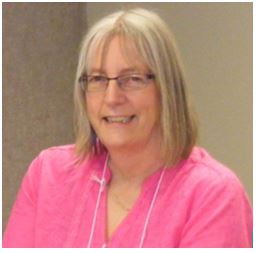
Janet Few took us on a glorious romp through the lives of women who could easily have been overlooked in family trees. Our male ancestors are more likely to have left a document trail, making them easier to trace. Women can more easily be forgotten, especially those who did not marry or did not have children. As well as the usual BMD and Census records, Janet pointed us in the right direction to enable research into women in our family trees who may have been in asylums, in workhouses, disabled, poor, criminals, enslaved or considered witches.
The first case study shared with us was Fanny Amelia, WOOLGAR, Janet’s great great aunt. Janet had a good oral history of her family and photos of Fanny’s siblings and parents. However, information about Fanny was limited. Even her name was remembered incorrectly. After locating a baptismal record and a record of a marriage to a considerably older man, for a long time Janet was unable to locate any more information about her. She finally tracked her down entering a workhouse and, from there, being admitted to an asylum. Janet was able to trace her ancestor as she left the asylum and shortly after returned to the workhouse and then to another asylum, where she died.
Record sources which proved of use to Janet included Bethlem Hospital Records, Incurable Patient Administration Register, Discharge and Death Books and Patient Case Books. These Patient Case Books can contain a wealth of information including name, address, occupation, age, religion, medical history, symptoms, physical description, observations from family and doctors, progress made, and some even contain photos.
Janet pointed out that the mentally ill and those with learning difficulties might have easily found themselves being admitted to workhouses or asylums. She pointed us to Peter Higginbotham’s excellent Workhouse website for much more detailed information.
Illegitimacy, or giving birth to illegitimate children were also ways that women could find themselves on the margins of society. Women would not identify themselves as prostitutes, for example on Census returns, but could be identified as such in other records. For example, at one time, St Mary the Virgin, Upchurch listed every mother of an illegitimate child as a prostitute in baptismal records. Criminal records and news reports of trials would also identify individuals as prostitutes.
Another case study was that of Charity PLATT from Lancaster. From being a nineteen year old domestic servant in the 1881 Census, her life can be traced through records if one knows where to look. She was variously reported as a ‘woman of bad character’, charged with drunkenness, assault, wounding, prostitution, receiving stolen goods and spent periods in prison. Prisoners Tried at the Assizes and the Habitual Criminals’ Register can prove useful in tracing such characters.
The next case study was that of Catherine Eve. When she arrived on British shores, she was technically not a slave, since slavery had been abolished. However, technicalities and actualities are not always the same thing. Janet was able to trace some details for Eve, although her enslaver was far easier to locate. The Slave Register proved useful for this.
Janet’s final case study involved Susanna Edwards, accused of witchcraft in seventeenth century Devon. Unlike many women accused of witchcraft, Susanna actually married and had six children (although she was not mentioned on the baptismal records for her children). Court records and sensationalist broadsheets were recommended sources of information here and for anyone wishing to know more about Susanna, Janet’s book ‘Sins as Red as Scarlet’ is available from her website.
In conclusion, Janet asserted that the onus is on us to preserve the memories of ALL of our ancestors. Moreover, if we focus wholly on the war heroes, we are setting unrealistic expectations for our descendants. We should remember the good, the bad and the ugly.
Report by Helen Stenhouse