
Simon gave a very comprehensive talk about this group of our ancestors and gave some useful websites which are listed at the end of this report.
Researching Brewery &Publican Ancestors
The talk covered 3 basic areas.
1) Breweries and Brewers, both historical and the records available,
2) Publicans
3) The pubs themselves and how to research them
He started by briefly summarising the development of Brewing which started millennia ago, once man stopped being a hunter gatherer and became a farmer growing cereal crops such as barley. In the early days beer was certainly not as we know it but a rather thick gloopy liquid. The peak of brewing was in the early 1900s.
The records relating to the staff of the Breweries are very limited. There may be lots of records relating to some of the breweries, not all by any means, but these tended to cover Board Minutes, Share records, sales and purchases of pubs, business correspondence, stock registers and brewing books. Hardly any include staff records. Larger companies took over smaller ones and often disposed of most of the records they had kept.
To find what, if any, records exist relating to a particular Brewery, it is best to search The National Archives Discovery Catalogue. Although the records may not be located there the catalogue will give details of where to find them. Most are held locally so that is where you need to search. Share records and bankruptcy may be at the National Archives.
Publicans
An important factor is who owned the Pub.
The Brewery, was it a tenancy or a managed house? A Tenant would have more independence but be responsible for his own trading income. A Manager would be paid a fixed salary. Both would be Tied Houses, i.e. they could only buy beer from the Brewery.
Pub Company, a more recent development where pubs are owned by the PubCo and run by managers, but beers are bought in from different breweries.
The Landlord, completely responsible for the business, free of the tie to any brewery, i.e. a Free House.
Freehouses tended to be more common in certain part of the country, mainly rural areas. They are much more common now than they were 100-200 years ago.
Licences are a very good source if they exist. There were 4 types of Licence
Beer house or Ale House – limited solely to selling beer (or Cider House selling only cider)
Beer and Wine
Full licence, Beer, wine and spirits
Full plus entertainment
Beer houses tended to be very simple buildings sometimes not much more than a single room. Taverns and Inns had better facilities and a full licence, they often had rooms for travellers. Coaching Inns were top of the range. Almost every town of any size had one and they were normally about 10 miles apart. It is very rare to find any pubs dating back more than 200 years.
Why were pubs important? They served a variety of uses within the community outside of supplying food and drink. Court sessions were held there, including coroners Inquests. They were a community centre and business transactions often took place there or in coffee shops. For a lot of working men they also offered a place to relax at the end of a hard day’s work. Very few women visited them at least until the 19th century when a Lounge bar was available.
The decline of Pubs has a variety of causes, Slum Clearance, Petty restrictions by authorities “ No loud laughing!”, alternative forms of leisure such as music halls, and more recently Covid.
Depending on the size of the pub there were various members of staff, The Landlord and the Barmaids, Ostlers, cooks, potboys and so on. They were nearly always paid cash in hand so records are scarce.
Sources include licensing records, newspaper reports, adverts for staff or for work or of pubs for sale or to let, and the census. If the licences still exist they will be in the local Archives. Pre 1858 details are limited.
Pitfalls of licences include that they are often arranged by Petty session Areas, the format could change between Benches and they are arranged by the name of the pub and not the Landlord. Recognizances sometimes still exist, these are bonds put up by friends or wealthier individuals to guarantee the good behaviour of the Landlord.
Other Sources include directories, Council records, Quarter sessions, wills and also photographs and other ephemera.
If the pub was called “the Tap” it was usually attached to the Brewery itself
Useful Websites:
http://www.dover-kent.com/2014-villages/1Pubs-Alphabetical-List.html - covers most all of Kent's towns and villages. If you can find a missing pub, or missing information, let them know details so they can incude it.
https://boakandbailey.com/2015/05/how-to-trace-a-uk-brewerys-history/
www.deadpubs.co.uk - mainly London area
http://pubshistory.com - mainly London
http://www.dover-kent.com/Links/Links.html - Links for an variety of pub related websites nationwide
https://www.hastingspubhistory.com/index.html - Pub history for Hasting & St Leonards Sussex 1800 - 2000
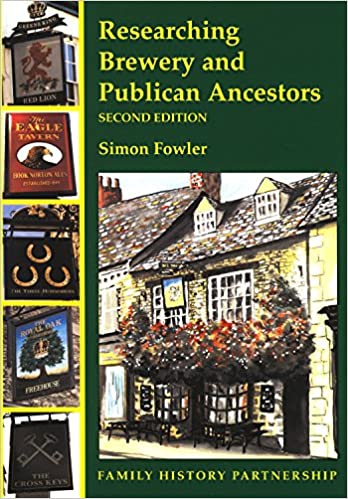
Simon has written a useful book “Researching Brewery and Publican Ancestors” which is also available from online bookshops.
Report by Ian Carter