
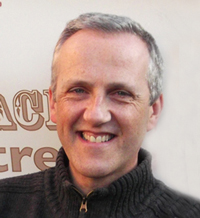
‘Electronic Family History (Advanced)’, Robert Palmer said that he had prepared a handout that would be sent to all participants at the end of his talk. During the talk Robert gave participants approx. 5 opinion polls, the first was to ask how long we, his audience, had been researching, and the last had we learnt anything new from his talk. The answer to the first was that most of us had been researching for decades and to the last yes, by the end of the talk, everyone had learnt something.
Robert started by emphasising that although his talk was about online research, Archival research is just as important. More so when you consider that estimates suggest that only 10% of records will eventually make it online and the rest will only be accessible in an Archive. Also remember that archival and internet research each need a very different set of skills. The internet is like a jungle having no structure and, unlike a human, ‘it’ doesn’t know if you are searching for a person or an object, so you may need to look for items in an unstructured way.
Robert continued by relating what a family researcher might find out there on the internet and included a few words of explanation about Key websites and Free websites. He went through a variety of websites and for sites you once used but can no longer find try the Wayback Machine https://archive.org/web/.
We were cautioned not to give too much information in a computer search as it can return no results at all, as a computer will try give you exactly all you requested. Conversely, giving too little information may mean more hits than you can cope with! He suggested, when doing any computer search, we give exactly what we are looking for with the least amount of information, add enough to lessen hit numbers and more details bit by bit if required. Then when you get the results sift through them, question them and don’t take anything at face value. Anyone can publish their research online and not all are meticulous with their sources. Therefore, seek advice from others, read magazines, attend conferences and talks etc. so that you can fully understand the results. Follow Social Media and use it to network.
You can also use your search engine which can turn up some interesting information on people. Although, he said that will not find people on the Commercial pay to view sites as they are locked down for subscribers only. Robert recommended the Advanced search engine option and said he preferred Google himself and used it as an example. Or you could type into the usual search field text using speech marks, to ensure those words will be included in the results. Then refine by adding dates, but you need to use dots not a hyphen between dates e.g. 1840..1860. Also refine by location, remembering that there are several places in the world with the same name so not just Cambridge but Cambridge UK. Don’t forget Google has different versions for different countries so find the correct URL for the most likely country and search that country's version of Google.
You can also exclude words for example someone named John Church is going to give you numerous churches and people named John. So, he suggested by typing in to Google: “John Church”-parish that it should leave out the parish churches in the results and if that doesn’t work think of a different word to exclude.
Robert ended with an interesting questions and answer session. One member asked how she could refine her Google search for the Surname “Lake” in Canada! Adding some had had Lakes named after them too! A tricky one was the reply!
There was so much useful information given in this talk that even the experienced family researchers will find a new trick of the trade to use on web searches. Robert has a free newsletter which you can sign up for on: https://myfamilygenealogy.co.uk/
Report by Tricia Baxter