
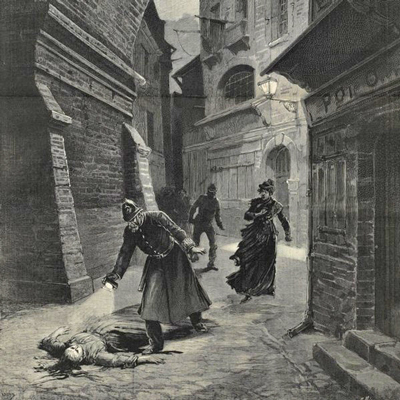
Helen gave an engaging talk about Victorian crime in our county, interspersed with anecdotes that she had come across in her research.
Most crimes in Victorian Kent were committed due to poverty, in an attempt to feed a family and stay out of the workhouse. Crime peaked in the 1840s due to bad harvests and the difficulty in securing employment. In the 1850s, there was less crime and police forces were becoming more effective. Most violent crime was committed due to alcohol or mental illness. Before the Victorian era, one could be hanged for a whole range of crimes. This gradually changed and eventually it was reserved for murderers.
Until 1857, law enforcement was in the hands of parish constables rather than a trained police force. It was not a nice job and no one wanted to do it. Some boroughs had their own police, as did dockyards. In the 1850s each county had to appoint a Chief Constable. The first one in Kent initially issued rifles to all his constables and had them marching, more in the style of soldiers!
In the early days of the police, constables were often found drunk on duty. There followed a gradual introduction of the use of farm labourers as police officers. They were used to walking for miles, the pay was better and more secure than a labouring job and, as long as they were not responsible for the village where they lived, they wouldn’t have to arrest members of their own family! Discipline was harsh but the 17s 6d pay was welcome. Gradually, order was established and the police began to be held in higher esteem although there was always a percentage of the population who hated them - the criminal fraternity.
Victorian local newspapers were full of reports of arrests and prosecutions. Poaching was rife. Many working class people did not consider it a crime to take a rabbit or pheasant to feed their families. The introduction of Stop and Search in 1862 was therefore very unpopular as it made the likelihood of a poacher being caught much greater.
With its proximity to London, Kent’s crime figures were inflated. A police force had existed in London from the 1820s so London criminals would take their chances in Kent. Thefts of silver and gold from vicarages and rectories were not unknown.
Hop pickers were also under the keen watch of Kent police. Women and children would come down from London to pick hops during the week with their menfolk joining them at the weekends. This would often involve drinking and the police were kept very busy. Kent police considered hop pickers ‘the lowest of the low’.
Sheep stealing was considered a major crime as property was sacrosanct. One man charged with stealing and killing a lamb to feed his family was sentenced to 10 years transportation to Australia, with little chance of ever getting back home to family.
Pickpocketing was not particularly a problem in rural Kent with its absence of crowds. However, a visit in 1858 by Queen Victoria to Gravesend brought many London pickpockets to the area. Needless to say, the Gravesend Magistrates Court was extremely busy the following week!
Drunkenness was rife among Kent’s labourers. Beer houses were busy and police stations had iron wheelbarrows with which to collect drunks and tip them into the cells for the night. The large military presence in the county added to this, accounting for ten percent of prisoners at any one time. Adding to this, the building of the railways brought a mini crime wave with each line being put down.
Helen finished with her assertion that Victorian crime casts a light on how life was at that time, just as modern crime casts a light on the world we now live in.
Helen’s talk was followed by tea and cakes (many thanks Brenda!) and the branch AGM.
Report by Helen Stenhouse