
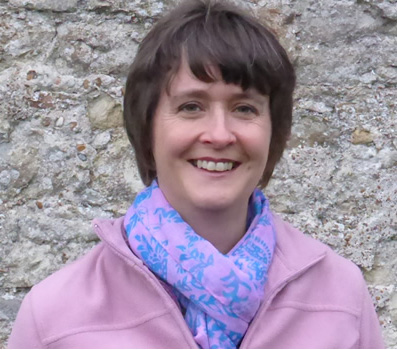
Celia gave a very informative, illustrated talk, looking mostly at the period before the age of the railways. The reason for potentially looking further afield for your relatives might be that you can’t find a birth or baptism – could that person 200 miles away be your relative? Could they have travelled that far from their family? She did mention that with the coming of railways c.1830 transport became much easier for the general public. By 1848 there were 5,000 miles of track and by the 1870s travel by train became affordable for almost everyone. More surprisingly, by the 1880s/1890s people had started to commute from home to work on a regular basis over distances of 30 miles or thereabouts.
But before the railways, how easy was it for our ancestors to travel and did they want to? In the Victorian period there was a massive migration from the countryside to London as Britain became more industrialised. Travel before the railway age was confined to horse, cart, carriage, by foot or by water. There was a significant coastal trade by sea around the UK involving mariners and fishermen and by the end of the 18th Century there was a large network of canals. The Poor Law Commission’s Migration scheme (1835-37) transported poor families from the south to the factories of Manchester using the canal network because, although the slowest means of transport, it was the cheapest. Settlement and Removal documents may show the removal by sea of someone to their place of legal settlement e.g. Thomas Read being moved from Dublin to Dover in the late 18th Century.
Travel by road was pretty atrocious as the roads were in a poor state for much of the year – muddy, potholed or baked hard. By 1555 the Great Highway Act provided some maintenance of roads through taxation, with local people providing the labour. By the 17th Century, turnpike roads came into existence, with a toll being charged and that money being ploughed back into improvements. By the 18th Century, businessmen invested in gated roads where tolls were charged (Turnpike Trusts), the money raised being split between shareholders and maintenance; by 1830 over 20,000miles of turnpike roads existed. Travel by horse was expensive for the poor – a good horse could cost 2-3 years wages for an average labourer, so the poor used handcarts, pack animals or stage wagons. In 1637 the first stagecoach made the journey between London and St. Albans and by the mid 1600s most major towns had stagecoach transport but it was expensive and uncomfortable. However, with the advent of turnpike roads, travel by stagecoach became more feasible. In 1784 Royal Mail coaches transported people as well as mail; they were faster, had better suspension and were exempt from stopping at Toll gates so the public got to their destination much more quickly. Celia gave various examples of distances travelled by stagecoach and the days and hours taken and how this improved over time.
Also, people could travel huge distances on foot. The Kentish Post in 1750 reports on a pedlar who travelled 50 miles in a day and 25 miles by noon the next day. Routes could also follow footpaths across country, making destinations more direct and people could also hitch lifts. Workers could move to better themselves or they may have been permanently itinerant like vagrants, beggars or pedlars. Theophilus Brocklehurst, a pedlar born in Derbyshire in 1734 was, by 1762, occupying a house in Strood, N. Kent 190 miles away from his original home. When he died, in 1799, he was living in Quarnford, Staffordshire about 200 miles away from Strood! The Poor Law Settlement and Removal records of Maidstone (records 1716-1819) show that many families were moved considerable distances, either from or to Maidstone, the longest journey being 265 miles. These records involved large numbers of people (922 people in 333 family groups) so Celia’s advice was that when searching for your family records, you must be prepared to look further away, not just at the nearest and obvious places.
In the late 18th Century, Trade societies e.g. Papermakers’ Society, provided tramping routes for their unemployed members to find work. At each Branch, the man presented his Blank book to be signed (usually at a pub where there were cheap lodgings) – if there was no work, he was given a sum for the journey on to the next Branch. The Tramping route for this society was 1200 miles to be completed in 10 weeks and 4 days, if no work was found. Therefore, many men with a trade may have walked hundreds of miles, looking for work and these tramping routes might be very important for finding a missing relative. Another example of migrations was apprenticeship records – many young men moved all over the country to learn a trade. Celia gave examples of the Zachary brothers, who were Master Brewers in London, and their apprentices came from numerous towns and villages, miles from the capital.
Celia gave a fascinating talk, with a great many examples from her own family research and beyond. The evening made us realise that our ancestors may well have moved much further than we ever suspected.
Further information can be found from Celia’s handout online:
Report by Lesley J Smith
Next Meeting
Tuesday 9th October 2018
From the slums of Portsea Island to the coalfields of Kentucky by Sharon Morris