
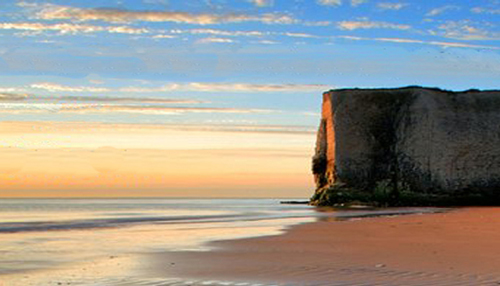
 Mike Bundock gave an informative illustrated talk about the seaside towns of Kent.
Margate became one of the earliest, largest and most popular places to visit for people mainly from London who wanted to “take to the waters” or later a holiday. When sea bathing began in the 1730s, Margate was well placed to take advantage of this activity, already a fishing town, it had the harbour to enable people to travel to the town by sea.
Margate was fortunate to have wide sandy beaches for bathing machines. It also had available several buildings that were suitable for use as holiday accommodation. The influx of visitors encouraged the development of places of entertainment, principally, the Assembly Rooms and the Theatre Royal
With the arrival of the railway Margate became even more accessible to the general population. Advertising campaigns were run jointly by the railway company and the Town Council to promote Margate as a holiday destination.
Ramsgate was never quite as popular as Margate but still had the harbour, bathing machines and the Pavilion to offer to visitors.
The development of Herne Bay as a seaside resort came slightly later, becoming popular when the pier opened in 1832. This pier, the second longest in the UK, allowed paddle steamers to bring visitors from London. The town’s pebble beach meant sea bathing machines needed chains rather than horses to pull them up the beach. In the twentieth century bathing tents became popular, eventually being displaced by the beach huts we see today.
Other towns mentioned in the talk were Broadstairs, Deal, Westgate on sea, Cliftonville, Dover and Folkestone, each with their own unique attractions.
Report by - Heather Bethell