
Sheila Harris, KFHS Vice Chairman gave this evening’s talk entitled Robert Constantine, Turkey Merchant. Sheila said her talk had nothing to do with Christmas or birds as had been supposed at one meeting she had given this talk. Robert Constantine is not a direct relative of Sheila although her 3x Great Grandmother was born a Constantine. Her interest in him was sparked after joining the Guild of One name studies and registering the surname Constantine
Sheila decided to leave out the Greek instances of the surname Constantine and restrict her search to those from Northern Europe. The first documented surname Constantine in the UK were between 1087 and 1300, amongst which she found some early Robert Constantines. One in Shropshire, whilst another was a landowner in the south of England with lands around Devon, Dorset and Hampshire. But the Robert Constantine, who was the subject of her talk, didn’t take his bow until around 1700.
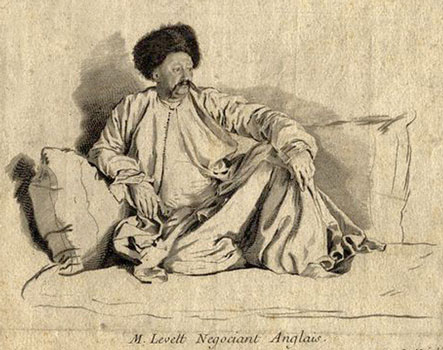
He arrived in Constantinople, with his wife Susannah, as a member of The Levant Company. Founded in 1592, to regularise trade between England and Turkey, The Levant Company differed from the East India Company in that it was a two-way exchange of goods between: England, Turkey and Levant. Members had to be wholesale merchants. Membership being achieved by patrimony or apprenticeship.
Robert died, aged nearly 60 years in Constantinople leaving a wife and 3 daughters. Elizabeth, the eldest was born 1702, Susannah and Mary were said to be minors at his death and were estimated to have been born sometime after 1710. Robert had become a very wealthy man and Sheila showed a long list of his bequests, including an interesting one to the ‘prisoners of the Baths’! Which she had found was a prison in a former Bath House but she hadn’t found a reason why Robert had chosen it as a recipient of his charity.
Sheila had found a document which she thought established his citizenship of London. She thought it was an attempt, to protect his daughters’ financial interests if he should die. As children of a Freeman of the City of London they would come under the Court of Orphans who could protect their financial interests. Although, the Court of Orphans had gone bankrupt the previous century leading to many court cases as orphans came of age to manage their own affairs it appeared reputable by the 18th century. Established around 1276 the Court of Orphans’ records are now held in the London Metropolitan Archives. The Court of Orphans monitored expenditure by the Executors of a Freeman’s will on behalf of his children, who could not be left out of a will or disinherited in any way. A considerable part of Robert’s wealth were goods which took a number of years to sell. Sheila showed the Inventory of Income and Expenditure required by the Court of Orphans with the total amount left being more than £7,000 (today over a million pounds).
Sheila continued to tell the stories about members of Robert’s family finding much about their lives and movements around the world from family letters. She found his wife Susannah’s maiden name was Pentlow and that she died in Canterbury in 1750 and was buried in Little Chart and left a will.
Robert’s daughter Elizabeth did well by marrying Baron Leopold Thalmann in 1731. He was the Austrian Ambassador and when he died, she says in a letter, that she had been ‘forced’ by circumstances to marry an Irish General ‘… you know how I hate the Irish’.
Sheila ended by taking questions and added that Family Search had a digitised collection of books which are searchable by name in which all manner of information was forthcoming about the people in this talk.
A remarkable story throwing a light on some unfamiliar documents and sources that most of us had no inkling existed.
Report by Tricia Baxter