
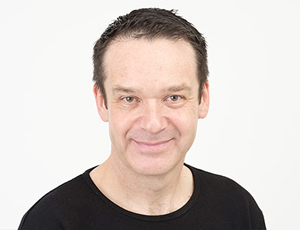
Paul Carter, KFHS’s technology consultant, gave branch members an enlightening presentation in which he extoled the virtues, in English and not techie speak, of ‘Publishing your research online. Why? And How?
Why publish online? - It’s the best way to make connections with thousands of people worldwide, some who may well be looking for the same ancestors as you are. Paul gave various statistics about the Global reach and said the number of people you could potentially reach online are mind boggling.
We were shown screen shots of several genealogical websites that publish standard tree charts. This is possibly the easiest way of trying to link with others on the same line of research. You just load up, or add people to your tree on to their site. Currently DNA analysis allows contact with your matches but you still need to work out how you are related to each other? Paul advised that a much wider audience can be reached by posting photographs and/or writing blogs (weblogs) i.e. short articles on subjects of interest concerning your research such as family names, historic events and places relating to your ancestors.
He gave examples of a photograph that he published online of row of gravestones which generated enough interest to answer some questions he had. These people would not have found him if it were not for the web. An article he wrote on Jutland, using family letters and timed to coincide with the anniversary of the battle, generated significantly more interest, pushing it higher on a Google search.
Paul advised that whatever method we use we should hold back some of the information and not give away everything. You need to tempt people to contact you for more. That way they don’t just download the ‘goods’ without interacting with you so that you miss out on any information they can give you in return.
How to publish online? - We were shown examples of various companies providing completely free web hosting including a domain name (website name). However, you can’t take the name with you if later you decided to move your research elsewhere. Paul suggested the cheapest and most flexible way would be to use a free site provided by a web host but to purchase your own domain name. It’s not a large outlay and for under £10 you should be able to lease a domain name for 2 years. But, he warned, never forget to renew your website’s domain name as if you allow it to lapse someone else can snap it up and you won’t get it back easily, if at all.
Paul explained GEDCOM a computer file structure that was developed by the church of the Latter-Day Saints and is designed to transfer data between different genealogical software.
Finding your audience – You need to find ways of driving your audience to your website. Get your site listed on a search engine such as Google or the genealogical search engine Cindi’s List. Search engines operate on keywords and number of hits to get your site to the most prominent position. Posting on social media sites such as Twitter using #hashtags (which help to identify a topic) could encourage people to come to your website and to a certain extent Facebook too but it is becoming less accessible of late.
Tools of the Trade – Paul suggested that a Flip-Pal flatbed scanner was versatile and easily manoeuvred to scan items that are not easily placed in a conventional scanner. Cameras and Phones were also recommended.
More Inspiration – examples of sites were given.
Charnwood Genealogy www.charnwood-genealogy.com/
Simon Last, researches old photographs and tries to connect them with their families.
Name & Place www.nameandplace.com
Paul is part of the team producing this software for one-name and one-place studies, part of which allows you to easily publish a web page for your project, an example of how there’s other ways of getting online and connecting with others. There’s no harm in having multiple ways for people to find you online.
If you wish to learn more about how to publish and promote your research online, Paul will be running:
● A day course (date to be confirmed) in 2020
at the Institute of Heraldic and Genealogical Studies in Canterbury www.ihgs.ac.uk
● A half-day course on 8th August 2020
at the Society of Genealogists www.sog.org.uk/books-courses/events-courses/
Report by Tricia Baxter
Next Meeting
Friday 13th December 2019
A local history talk by Geoff Doel