
CANTERBURY’S FRENCH SPEAKING COMMUNITY 1640-1800 PROJECT
As part of the Research for a new Historical Atlas of Canterbury, I am researching the history of the French speaking community in Canterbury from 1640–1800, and I am interested in contacting anyone who has a family connection to the community who can help with researching individual families in Canterbury.
The project traces the history of the French speaking community in Canterbury from 1640–1800, which provides an example of the integration and dispersal of a large immigrant community which represented perhaps a third of the population of Canterbury by the late 17th Century. By the start of the 19th century the distinct nature of the community had been reduced through inter-marriage and onward migration, particularly to London. Some families also returned to France or the Netherlands.
Members of the community arrived in Canterbury as refugees from religious persecution in two major phases of settlement. The first phase involved families fleeing from Wallonia in the Netherlands as well as later French refugees, who arrived after the Massacre of St Bartholomew in 1572. This first exodus is much better known and documented than the second phase following the Revocation of the Edict of Nantes by Louis XIV in 1685. There is very little research into the community after the 1640s and this project will address that gap. The research focuses on the period from 1640, when Archbishop Laud tried unsuccessfully to force the community to integrate by abandoning their church in the crypt of Canterbury Cathedral and worship in Canterbury’s parish churches.
From the beginning, the French-speaking community was largely self-governing through the discipline of the French Church, which policed unsocial behaviour and supported its members with poor relief, while during the civil wars the community remained officially neutral. The community was also subject to commercial restraint and at first its members were unable to own property in Canterbury and were restricted to working in the cloth making industries. The slump in these industries in the 17th century combined with the large influx of immigrants from France in the 1680s made these constraints unsustainable and the city council started to take responsibility for providing poor relief to the immigrants. There is also evidence that members of the community expanded their commercial activities into other trades.
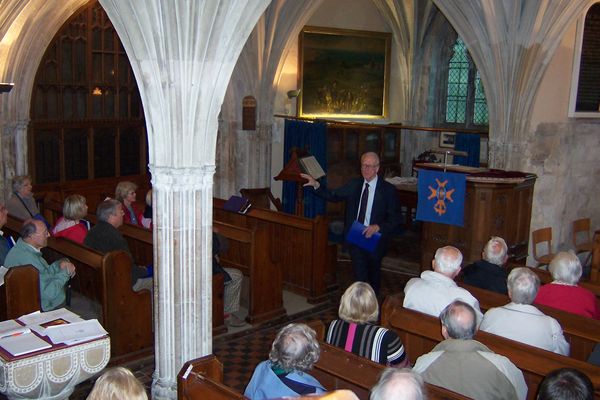
As President of the British Association for Local History, I am keen to engage local historians in the research and a symposium on the project will be held in 2026 for family and local historians, academics and students. The symposium will be developed in partnership with the Huguenot Society, the Huguenot Museum at Rochester, the French Church in Canterbury, the Centre for Kent History and Heritage at Canterbury Christ Church University and local History societies. The story of the French speaking community in Canterbury will identify the social, economic and religious conditions, which enabled the local acceptance of such a substantial group of immigrants in Early Modern England.
If you do have any family research into the French speaking community in Canterbury that you can share with me please contact me by email jackie.eales@canterbury.ac.uk or by post at the address below.
Jackie Eales, Professor Emeritus, Canterbury Christ Church University, North Holmes Road, Canterbury CT1 1QU.