
A recording of this talk scheduled for 10am was broadcast at 8pm the same day.
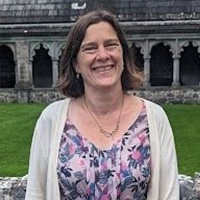
Our speaker, Caroline Oulton, started her talk by saying. How did holiday reading evolve? It is more complicated than just reading a book!
Seaside resorts came into being in the 18th century. In the early days they were marketed as a health resort and it could be an uncomfortable experience involving sea bathing, sea cures, including drinking the sea water. Travel from inland cities would have been by boat. The early Hoy boats used between London and Thanet were crowded, sea sickness would have been an issue and passengers risked being in very close proximity to complete strangers. The hoy sailing boats were later replaced by the faster and more comfortable steam packets and it became fashionable for a wife and children to spend a few weeks at the seaside, with her husband visiting at weekends when he could get time off work.
This meant that women of the household had an opportunity to meet people outside the usual rigid social rules and there were opportunities for flirtation.
This was reflected in the types of literature which became increasingly popular, particularly once railways connected cities and seaside towns. Carolyn suggested the books were not bought to be read, but to act as a prop, to hide behind, so young women in search of a husband, or even a holiday romance, could observe those around her without being seen to stare.
The books which became popular were sensational and often included adultery, missing wills and railway chases. Carolyn referenced several books which became popular in the late Victorian period:
- Mrs Brown at the Seaside
- Zig Zag guide to Kent 1897
- There and Back 1876
- East Lynne
- Mr Barnes of New York
- The Mystery of the Hansom Cab
Writers were inspired by the lack of limitations and the mixing of people who otherwise would never have met.
Carolyn also described the development of the seaside towns in Thanet, the class distinctions which were assumed between them and the development of piers which enabled visitors to keep a distance between them and local residents.
There were opportunities for people to assume a role they didn’t hold in their everyday life, to pretend to be someone they weren’t, which would obviously have implications if they established a relationship with someone which lasted beyond the holiday itself.
Carolyn promoted her book on the same subject as the talk, available on Amazon, and also the website Kent-maps.online which has useful information about the county and coastal area.
Report by Viv Carter